From Sacrifice to Supply Chain: Reframing Eid Rawhide as a Strategic National Resource in Bangladesh, 2026
- Published On: May 26, 2026
- Author: Al Mamun
- Tags: Supply Chain, Rawhide, Eid-ul-Azha, CPER, Bangladesh
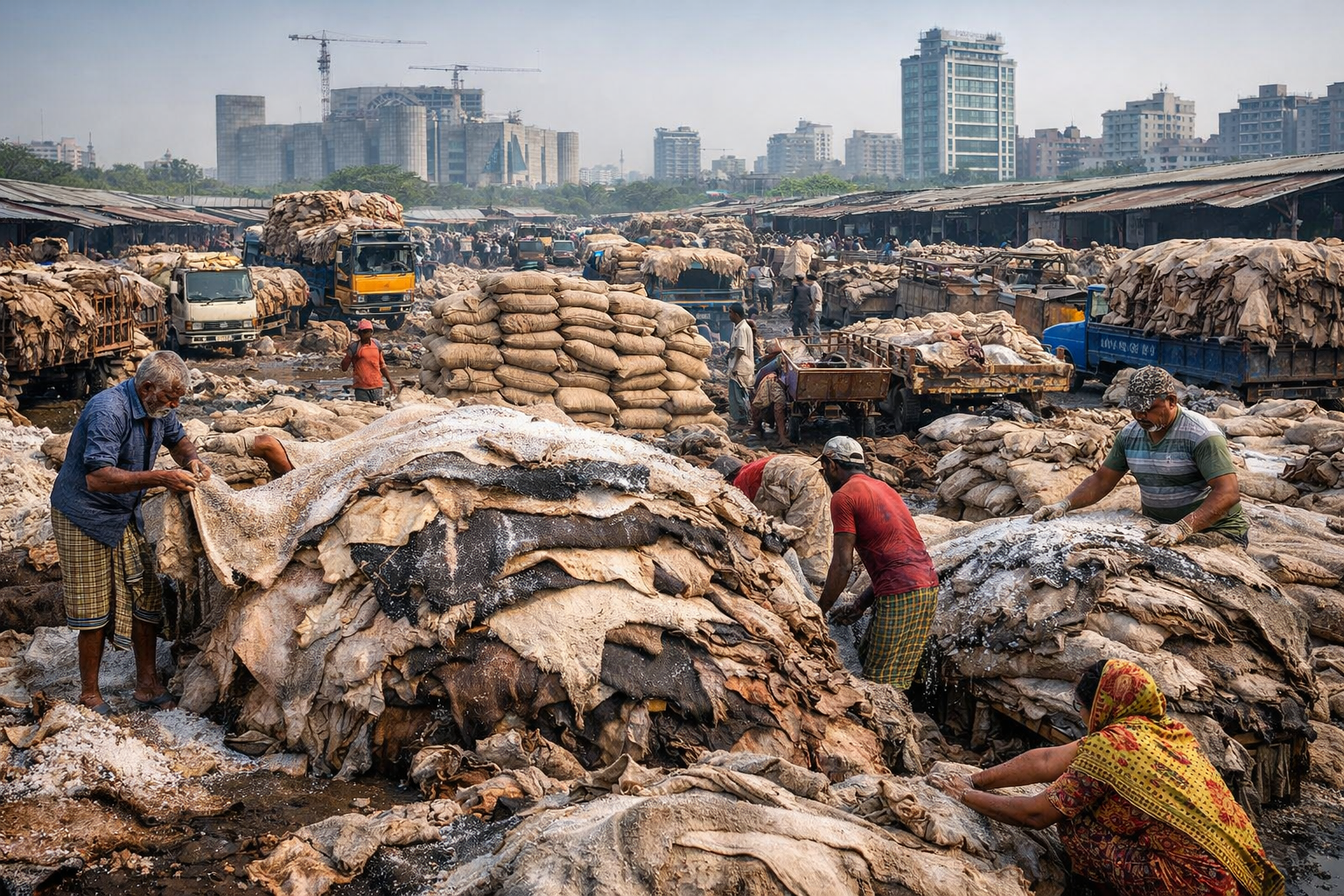
Each year during Eid-ul-Azha, Bangladesh generates a significant yet underutilized resource: millions of raw hides produced within a three-day period. However, this temporary surplus often results in waste, lost economic value, and price volatility rather than serving as a strategic advantage. Recent research on the leather value chain, sustainability, and export potential suggests that this annual event could be transformed into a valuable national asset by 2026.
The Eid Rawhide Moment: Blessing and Bottleneck
- - Approximately 40 percent or more of annual hides and skins are generated during Eid-ul-Azha, creating a substantial temporary oversupply that disrupts and destabilizes the leather value chain (Strasser et al., 2013; Islam et al., 2020; Paul et al., 2013).
- - The supply chain follows a pyramidal structure, moving from butchers to local collectors, then to traders or merchants, and finally to tanneries. The number of intermediaries generally increases with greater distance from tanneries (Strasser et al., 2013; Islam et al., 2020).
- - Temporary intermediaries participate only during Eid, often relying on the religious and social trust associated with the trade in sacrificial animals. However, these actors frequently lack expertise in grading and pricing, which can reduce hide quality and weaken the competitiveness of downstream tanneries (Strasser et al., 2013; Strasser, 2015; Islam et al., 2020).
Key Stress Points Around Eid
Table 1: How Eid rawhide shocks the leather value chain

From Rawhide to Strategic Resource
Leather is already recognized as a high-priority export sector in Bangladesh with significant growth potential. Nevertheless, the country currently accounts for only a small share of the global leather market (Chowdhury & Hawlader, 2024; Hong, 2018; Mollik, 2022; Paul et al., 2013). Transforming Eid rawhide into a strategic resource by 2026 requires several key measures:
- - Streamlined collection and preservation: Policy recommendations emphasize increased investment and the establishment of efficient collection and preservation facilities during Eid, particularly in rural areas, to stabilize supply chains and improve traceability (Hong, 2018; Strasser et al., 2013; Islam et al., 2020).
- - Upgrading along the value chain: Bangladesh continues to export a substantial share of semi-finished leather rather than higher-value footwear and leather products. Improving rawhide management and moving toward the production of finished goods could generate significant value addition (Chowdhury & Hawlader, 2024; Hong, 2018; Khan, 2014; Milton, 2013; Shahriar et al., 2021).
- - Circular economy and waste utilization: Studies identify circular economy practices and sustainable manufacturing as key drivers for transforming waste into productive inputs while reducing environmental pollution (Moktadir et al., 2018; Paul et al., 2013).
Governance, Sustainability, and Social Justice
- - Environmental compliance: Centralized effluent treatment facilities and effective solid waste management are consistently identified as key priorities for maintaining export competitiveness and supporting recovery from post-COVID disruptions (Chowdhury & Hawlader, 2024; Moktadir et al., 2018; Rahman, 2022; Moktadir et al., 2023; Paul et al., 2013).
- - Barriers to sustainable supply chains: Major barriers include insufficient managerial commitment, weak regulatory enforcement, outdated machinery, high costs associated with green technologies, and limitations in reverse logistics systems (Moktadir et al., 2018; Strasser, 2015; Reza, 2022; Uddin et al., 2019; Chen et al., 2022).
- - Child labor and informality: Research documents severe forms of child labor within Bangladesh’s leather sector, driven by precarious, cost-constrained, and informal enterprises operating within complex supply chains (Gorman, 2021; Maksud et al., 2024). Therefore, any effort to frame rawhide as a strategic resource must directly address these structural challenges.
Pathways to a 2026 Eid Rawhide Strategy
a. Policy and institutions
- - Explicitly designate Eid rawhide as a seasonal national resource within industrial and export policy, linking festival-period collection to long-term export growth and employment objectives (Chowdhury & Hawlader, 2024; Hong, 2018; Shahriar et al., 2021).
- - Coordinate leather cluster zones with integrated services (finance, skills, logistics, CETP facilities) so that Eid rawhide flows into a modern, compliant ecosystem rather than into ad hoc, environmentally polluting clusters (Moktadir et al., 2018; Strasser, 2015; Hong, 2018; Paul et al., 2013).
- Invest in training programs for collectors and intermediaries focused on grading, pricing, and preservation to safeguard product quality and support fair returns for producers (Strasser et al., 2013; Strasser, 2015; Islam et al., 2020).- - Provide credit support to small and medium-sized enterprises (SMEs) to facilitate the adoption of green and circular technologies and enable progression toward higher-value leather products (Moktadir et al., 2018; Chowdhury & Hawlader, 2024; Reza, 2022; Hong, 2018; Chen et al., 2022).
b. Social and ethical dimensions
- - Integrate child labor safeguards, monitoring mechanisms, and targeted support for informal enterprises into all Eid rawhide initiatives to ensure that value creation does not rely on child labor (Gorman, 2021; Maksud et al., 2024).
By 2026, Eid-ul-Azha rawhide in Bangladesh has the potential to transition from an unmanaged by-product of ritual sacrifice to a deliberately planned strategic resource. Existing research identifies several essential components for this transformation, including improved collection and preservation during the festival period, integrated and sustainable manufacturing systems, enhanced governance and financial support for small and medium-sized enterprises, and strict adherence to environmental and labor standards. If effectively implemented, this shift from sacrifice to supply chain integration can promote exports, increase rural incomes, and generate dignified employment, while reducing waste, price volatility, and hidden forms of exploitation.
References
Chen, X., Xu, L., Ren, Z., Jia, F., & Yu, Y. (2022). Sustainable supply chain management in the leather industry: a systematic literature review. International Journal of Logistics Research and Applications, 26, 1663 - 1703. https://doi.org/10.1080/13675567.2022.2104233
Chowdhury, F., & Hawlader, M. (2024). Sustainable Growth Strategies for Bangladesh’s Leather Industry: Policy Recommendations and Future Perspectives. International Journal of Business and Management. https://doi.org/10.5539/ijbm.v19n2p120
Gorman, C. (2021). Exposing the Worst Forms of Child Labour in Bangladesh’s Leather Sector. https://doi.org/10.19088/clarissa.2021.001
Hong, S. (2018). Developing the Leather Industry in Bangladesh. ADB Briefs. https://doi.org/10.22617/brf189645-2
Islam, M., Sarker, M., Hossain, M., Ali, K., & Noor, K. (2020). Towards Sustainable Supply Chain Management (SSCM): A Case of Leather Industry. Journal of Operations and Strategic Planning, 3, 81 - 98. https://doi.org/10.1177/2516600x20924313
Khan, W. (2014). Leather Industry in Bangladesh: Opportunities and Challenges. 117-124. https://doi.org/10.18034/ajtp.v1i3.533
Maksud, A., Hossain, K., Sayed, S., & Aked, J. (2024). Informal Economy Perspectives on the Prevalence of Worst Forms of Child Labour in Bangladesh’s Leather Industry. https://doi.org/10.19088/clarissa.2024.005
Milton, M. (2013). Unlocking the Upgrading Potential of the Bangladeshi Leather Sector: A Study of the Opportunities and Bottlenecks Along the Value Chain. https://doi.org/10.2139/ssrn.2297110
Moktadir, A., Rahman, T., Rahman, H., Ali, S., & Paul, S. (2018). Drivers to sustainable manufacturing practices and circular economy: a perspective of leather industries in Bangladesh. Journal of Cleaner Production, 174, 1366-1380. https://doi.org/10.1016/j.jclepro.2017.11.063
Moktadir, A., Ali, S., Rajesh, R., & Paul, S. (2018). Modeling the interrelationships among barriers to sustainable supply chain management in leather industry. Journal of Cleaner Production, 181, 631-651. https://doi.org/10.1016/j.jclepro.2018.01.245
Moktadir, M., Sarker, M., Sharif, T., & Abedin, M. (2023). A decision support model to investigate the pandemic recovery challenges and strategies in the leather supply chain. Annals of Operations Research. https://doi.org/10.1007/s10479-023-05708-5
Mollik, B. (2022). Bangladesh’s Leather Industry. SSRN Electronic Journal. https://doi.org/10.2139/ssrn.4044704
Paul, H., Antunes, A., Covington, A., Evans, P., & Phillips, P. (2013). Bangladeshi Leather Industry: An Overview of Recent Sustainable Developments. Journal of The Society of Leather Technologists and Chemists, 97, 25-32.
Rahman, M. (2022). AN ANALYSIS ON THE LEATHER INDUSTRY OF BANGLADESH: IDENTIFICATION OF BARRIERS, CHALLENGES, AND WAY OUTS. International Journal of Management & Entrepreneurship Research. https://doi.org/10.51594/ijmer.v4i3.310
Reza, M. (2022). The Ins and Outs of the Leather Industry in Bangladesh. Journal La Bisecoman. https://doi.org/10.37899/journallabisecoman.v3i2.564
Shahriar, S., Kea, S., Abdullahi, N., Rahman, R., & Islam, R. (2021). Determinants of Bangladesh’s Leather Exports to Its Major Trade Partners: A Panel Gravity Model Approach. Global Business Review. https://doi.org/10.1177/09721509211036288
Strasser, J., Dannenberg, P., & Kulke, E. (2013). Temporary resource availability and quality constraints in the global leather value chain – The impact of the festival of sacrifice on the leather industry in Bangladesh. Applied Geography, 45, 410-419. https://doi.org/10.1016/j.apgeog.2013.02.008
Strasser, J. (2015). The Leather Value Chain in Bangladesh—Results of a Qualitative Analysis. 49-259. https://doi.org/10.1007/978-3-319-22548-7_5
Uddin, S., Ali, S., Kabir, G., Suhi, S., Enayet, R., & Haque, T. (2019). An AHP-ELECTRE framework to evaluate barriers to green supply chain management in the leather industry. International Journal of Sustainable Development & World Ecology, 26, 732 - 751. https://doi.org/10.1080/13504509.2019.1661044