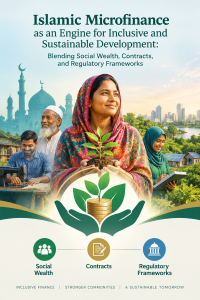
Islamic Microfinance as an Engine for Inclusive and Sustainable Development: Blending Social Wealth, Contracts, and Regulatory Frameworks
- By Al Mamun, Nusrat Jahan Nishat, and Anisur Rahman
- Islamic microfinance; zakat; waqf; qard al-hasan; murabahah; profit-and-loss sharing; Maqasid al-Shariah; ESG; mission drift; Bangladesh
Project Overview
Microcredit has widened access to finance in Bangladesh and across the Global South. For many low-income households, though, high effective costs, fixed repayment schedules, and rising obligations can turn a small loan into a long cycle of debt. Others stay outside formal finance altogether because interest-based products conflict with their faith.
This CPER working paper asks what would make Islamic microfinance a real engine of inclusive and sustainable development, and not simply interest-free credit under a different name. It brings together Islamic commercial jurisprudence (Fiqh al-Muamalat) and development economics in a three-layer framework: Islamic social wealth, the financial contract, and the regulatory and governance environment. Its central argument, which we call the fit principle, is that outcomes depend on matching each client group’s vulnerability and enterprise readiness with the right funding source, contract, and oversight.
Key Research Focus Areas
- - Asset-backed and interest-free financing: how benevolent loans (Qard al-Hasan) and trade, lease and forward-sale contracts help clients acquire working assets, such as farm inputs and tools, and where these contracts work or fall short.
- - Islamic social wealth: the role of Zakat and Waqf as relief, first-loss and patient capital for the ultra-poor, and how they can lead into productive finance.
- - Three case models: cooperative networks in Indonesia (BMT), mosque-based interest-free lending in Pakistan (Akhuwat), and the Rural Development Scheme of Islami Bank in Bangladesh, compared on cost to borrowers, repayment, outreach, and the strength of the evidence.
- - Women’s empowerment and green innovation: how Islamic models may support women entrepreneurs and climate-resilient agriculture, and what the evidence does and does not yet show.
- - Measurement: a proposed Maqasid-ESG scorecard, plus a plain comparison of flat markups with declining-balance interest rates so that costs can be compared fairly.
Expected Impact
The paper is an integrative review. It grades evidence by research design, sets out six testable propositions, and ends with practical recommendations for policymakers, regulators and financial institutions. These cover tax treatment of intermediate asset transfers, proportionate prudential rules, ring-fenced social funds, evaluated graduation pilots, and disclosure of effective annual cost. For Bangladesh, the first steps proposed are better coordination among banking, microfinance, and social-finance authorities, and an evaluated pilot to test what works.