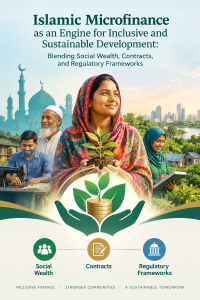
Islamic Microfinance as an Engine for Inclusive and Sustainable Development: Blending Social Wealth, Contracts, and Regulatory Frameworks
Project Overview
While conventional microcredit has expanded financial access across Bangladesh and the Global South, many low-income families face severe hurdles due to high interest rates, compounding obligations, and strict repayment pressures that can lead to a stressful cycle of debt. Furthermore, a significant segment of the population remains excluded from formal financial systems due to faith-based or ethical considerations.
This ongoing CPER working paper explores a compassionate, sustainable alternative: Islamic Microfinance. By bridging traditional Islamic jurisprudence (Fiqh al-Muamalat) with modern developmental economics, this research investigates how financial inclusion can be achieved without compromising human dignity or financial stability.
Key Research Focus Areas
- - Interest-Free and Asset-Backed Financing: Examining how tools like benevolent credit (Qard al-Hasan) and trade-based agreements help beneficiaries acquire real working assets—such as farming inputs, tools, or small business equipment—rather than accumulating cash debt.
- - Integrating Islamic Social Wealth: Analyzing the structural role of Zakat (charitable giving) and Waqf (endowments) as financial safety nets that absorb economic shocks and support the ultra-poor.
- - Comparative Global Models: Evaluating successful grassroots and commercial architectures, including cooperative networks in Indonesia (BMT), mosque-based interest-free lending in Pakistan (Akhuwat), and commercial bank rural development schemes right here in Bangladesh.
- - Women’s Empowerment & Green Growth: Highlighting how inclusive Islamic models support female entrepreneurs and fund climate-resilient agricultural practices aligned with international ESG standards.
Expected Impact
The study concludes with strategic policy recommendations for lawmakers, regulators, and financial institutions. By addressing regulatory bottlenecks—such as double taxation on intermediate asset transfers and capital adequacy rules—this research aims to help policymakers build a resilient, ethical financial ecosystem that leaves no one behind.