
From Local Jhalmuri to Global Shelves: How Bangladesh’s Dry Food Industry is Shaping an $8 Billion Market
- Published On: Aug 18, 2026
- Author: Al Mamun
- Tags: Food Processing
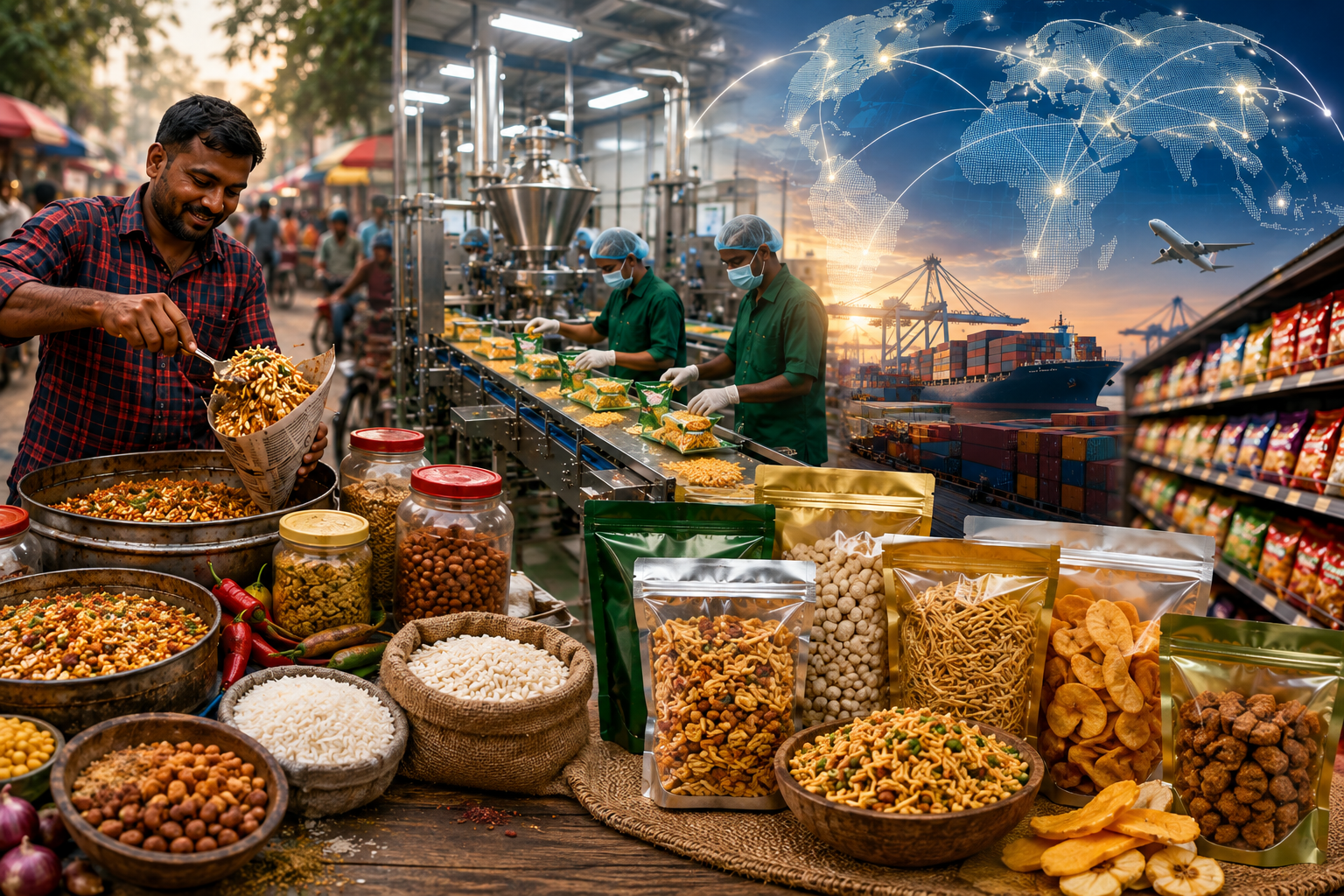
If you walk down a lively street in Dhaka on any given afternoon, you will almost certainly spot a street vendor deftly tossing puffed rice, mustard oil, chopped onions, green chilies, and a proprietary mix of spices inside a rusted tin canister. Within seconds, a warm paper cone of jhalmuri is handed over to a waiting customer. It is cheap, immensely satisfying, and deeply tied to the cultural fabric of Bangladesh.
Now, picture a very different scene: thousands of miles away in a brightly lit supermarket aisle in East London, Queens, or Dubai. A third-generation Bangladeshi-British shopper picks up an airtight, nitrogen-flushed foil package featuring vibrant graphics. Inside is that exact same flavor profile—processed, standardized, and sealed for a two-year shelf life.
This journey from street-corner tin cans to high-tech international retail displays tells the story of one of South Asia’s most dynamic economic transformations. What was once treated purely as informal cottage cuisine has grown into a structured, highly competitive dry food and food-processing ecosystem valued at nearly $8 billion (United States Department of Agriculture [USDA], 2025).
From Cottage Kitchens to Automated Processing Lines
For decades, Bangladesh's dry food market operated almost entirely within the unorganized sector. Housewives made chanachur (spicy fried snack mixes), pitha (traditional rice cakes), and achhar (pickles) at home, while small neighborhood bakeries supplied local mudir dokan (corner grocers) with unbranded biscuits packed in plain glass jars.
The structural shift began in the late 1990s and early 2000s, driven by early industrial pioneers who recognized two fundamental realities: first, that urbanization would create a mass demand for hygienic, pre-packaged convenience foods; and second, that millions of Bangladeshi migrants living abroad were starved for authentic home flavors (Bangladesh Investment Development Authority [BIDA], 2024).
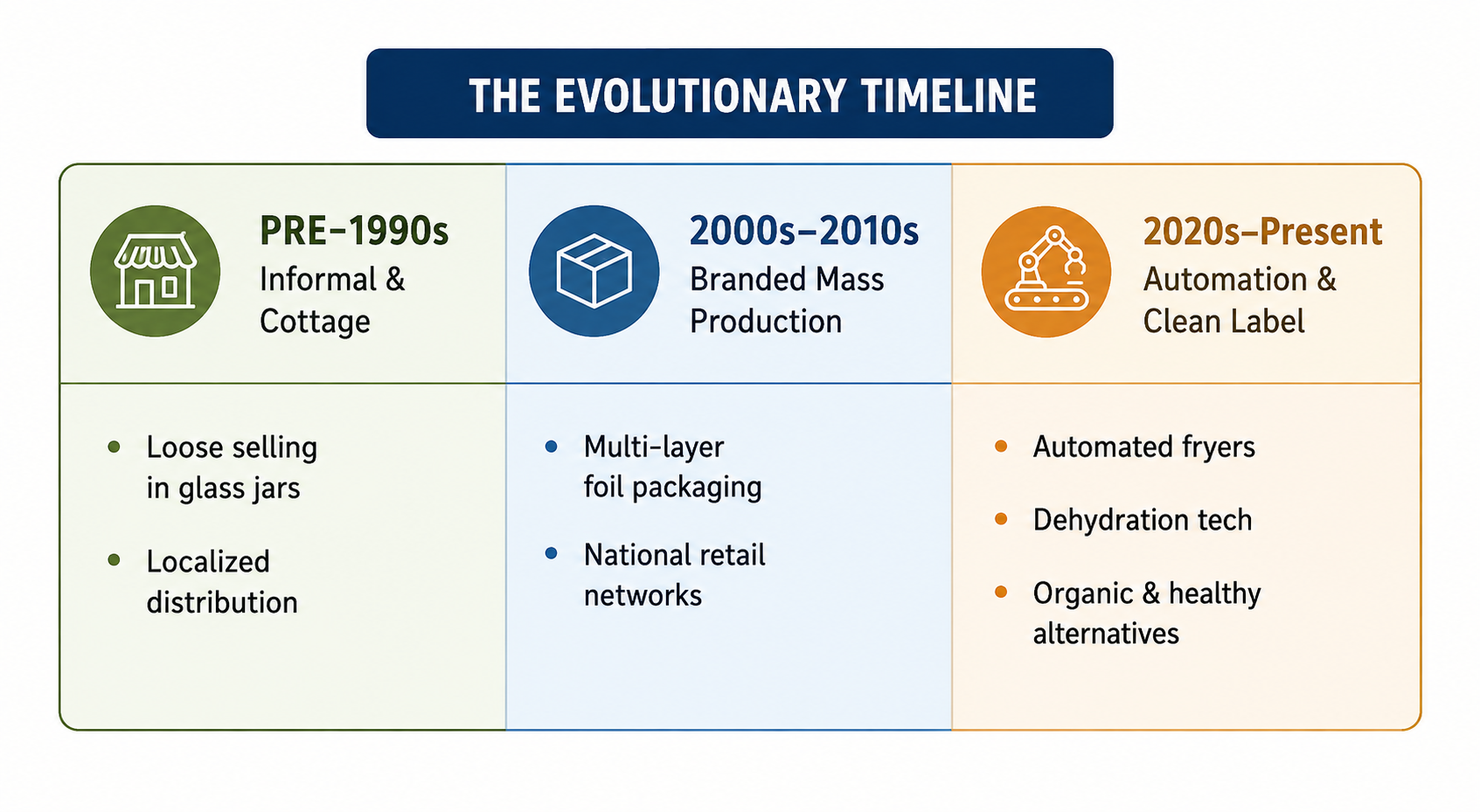
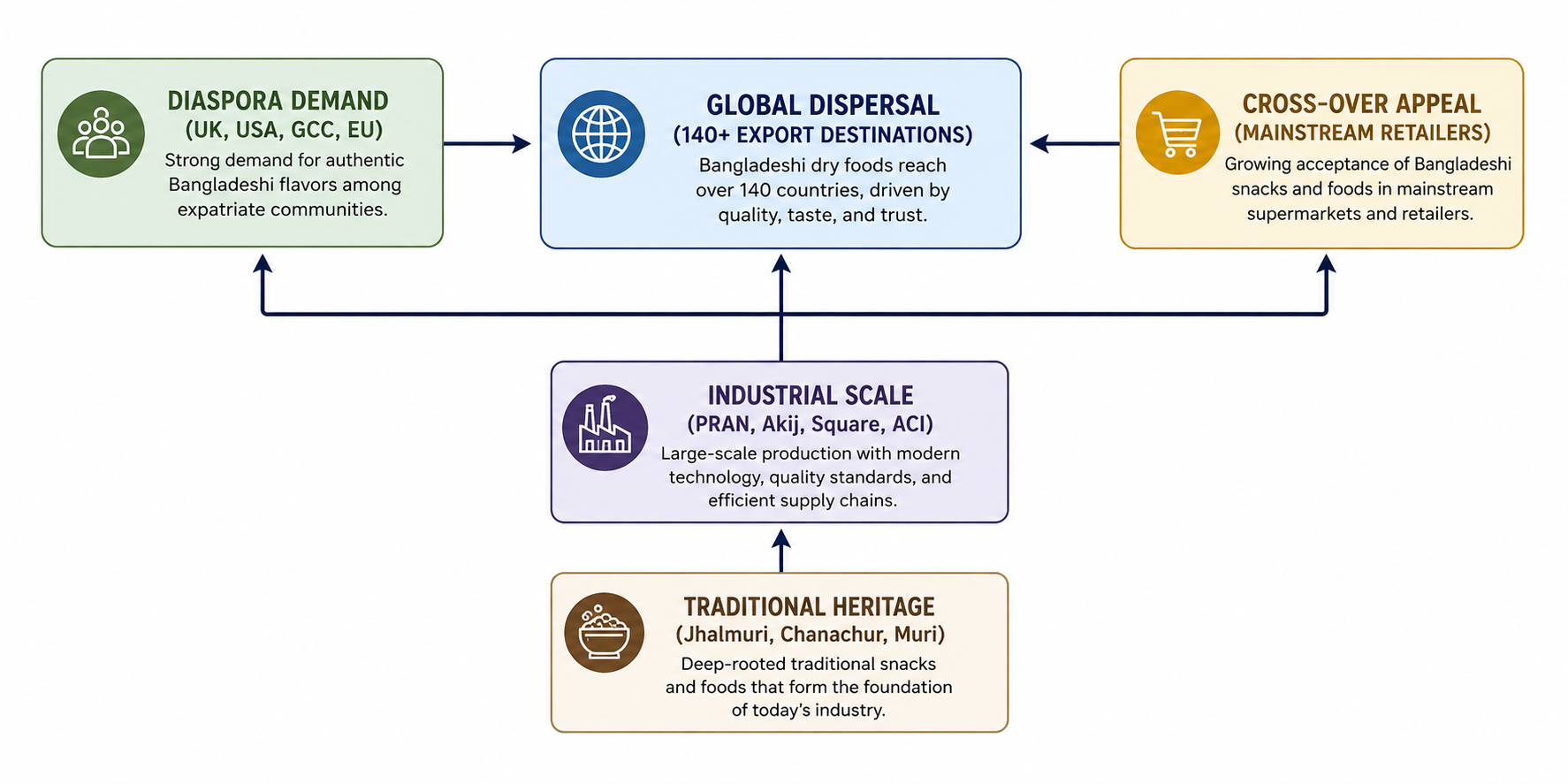
Pioneering conglomerates like the PRAN-RFL Group transformed the landscape by investing in contract farming networks, multi-layer foil packaging, and commercial extrusion technologies. Today, PRAN is joined by major domestic industrial groups—including Akij Food & Beverage, Bombay Sweets, ACI, and Square Food & Beverage—operating automated processing plants that convert tons of locally sourced grains, pulses, and spices into export-ready packaged goods every hour.
More recently, this industrial footprint has expanded into value-added dehydration. Rather than losing large percentages of seasonal tropical harvests to post-harvest decay, processors are adopting commercial fruit-drying technologies to turn local mangoes, pineapples, and jackfruit into shelf-stable snacks geared toward both local children and overseas health food markets.
Dual Growth Drivers: Busy Urbanites and the Global Diaspora
The rapid rise of Bangladesh's dry food market is fueled by two strong, complementary engines: domestic lifestyle changes and international export opportunities.
1. The Domestic Market Shift
At home, demographic changes have rewritten the grocery list. Rapid rural-to-urban migration, an expanding middle-and-affluent class (MAC), and steadily rising female workforce participation mean households have significantly less time for elaborate, from-scratch food preparation (Mordor Intelligence, 2026). Ready-to-eat (RTE) dry snacks, packaged puffed rice (muri), and dry bakery cakes have moved from "occasional treats" to daily pantry essentials.
| Demographic Factor | Market Impact
| Rising MAC Population | Greater willingness to pay a premium for branded, hygienic packaging over loose commodities.
| Urban Workforce Needs | High demand for shelf-stable, portion-controlled office and school snacks.
| Supermarket Expansion | Modern retail chains (Shwapno, Unimart, Meena Bazar) require standardized barcoding and long shelf life.
2. The Export Engine
Beyond national borders, Bangladesh's agro-processing sector generates over $1 billion in export earnings annually, reaching consumers in more than 140 countries (BIDA, 2024; USDA, 2025).
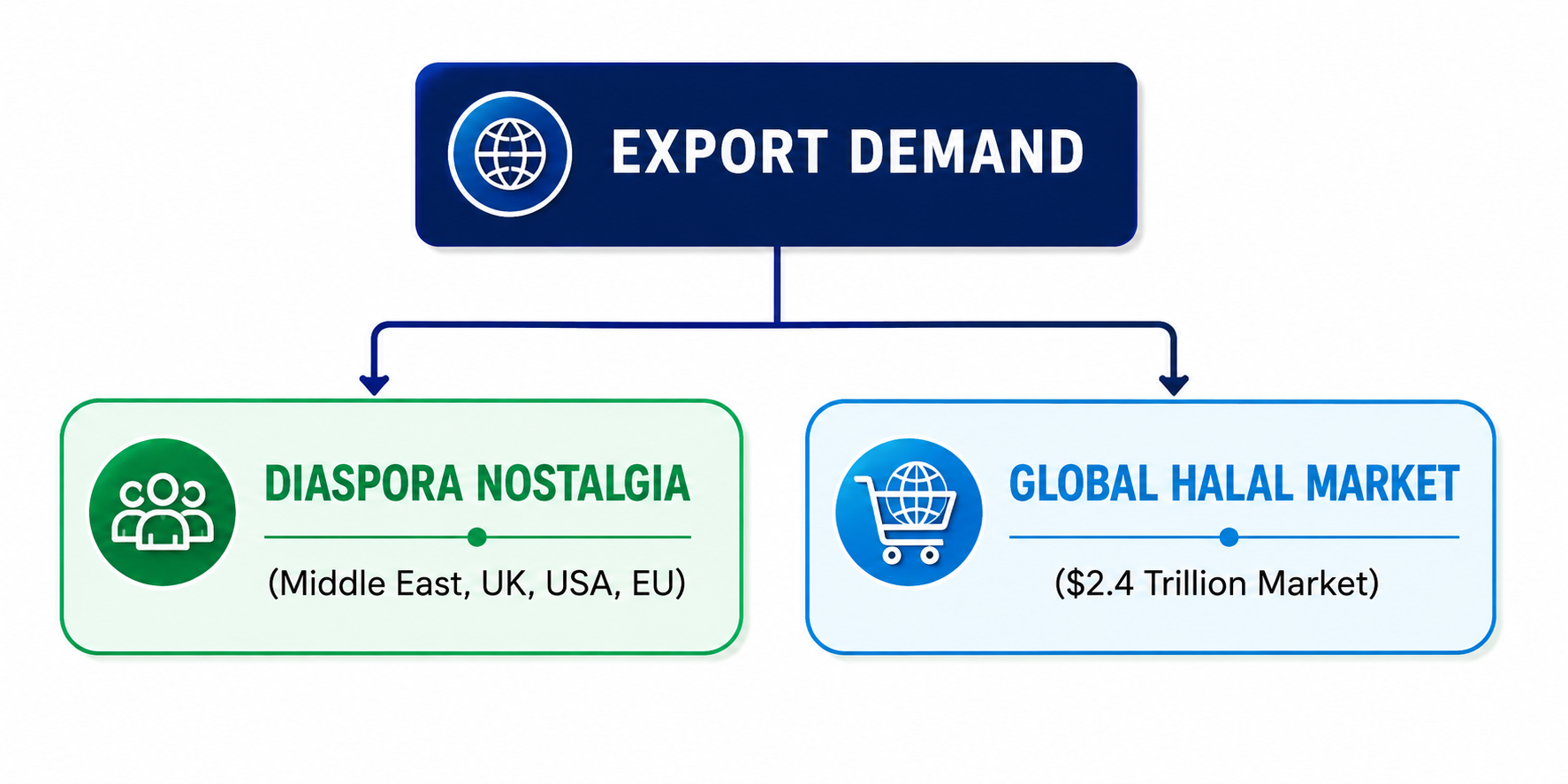
The primary driver was initially nostalgia—serving non-resident Bangladeshis in the Gulf Cooperation Council (GCC) countries, the United Kingdom, and North America. However, these products are increasingly making crossover leaps into mainstream foreign supermarket chains. Furthermore, because Bangladesh's manufacturing ecosystem is inherently tuned to Islamic dietary requirements, local dry food exporters hold a natural advantage in the $2.4 trillion global Halal food market (BIDA, 2024).
The Micro-Entrepreneur & F-Commerce Wave
While mega-conglomerates dominate mass production, a parallel revolution is taking place on social media feeds across Bangladesh. Thousands of micro-entrepreneurs—predominantly women—are leveraging Facebook and Instagram (a trend known locally as F-Commerce) to launch boutique dry food businesses.
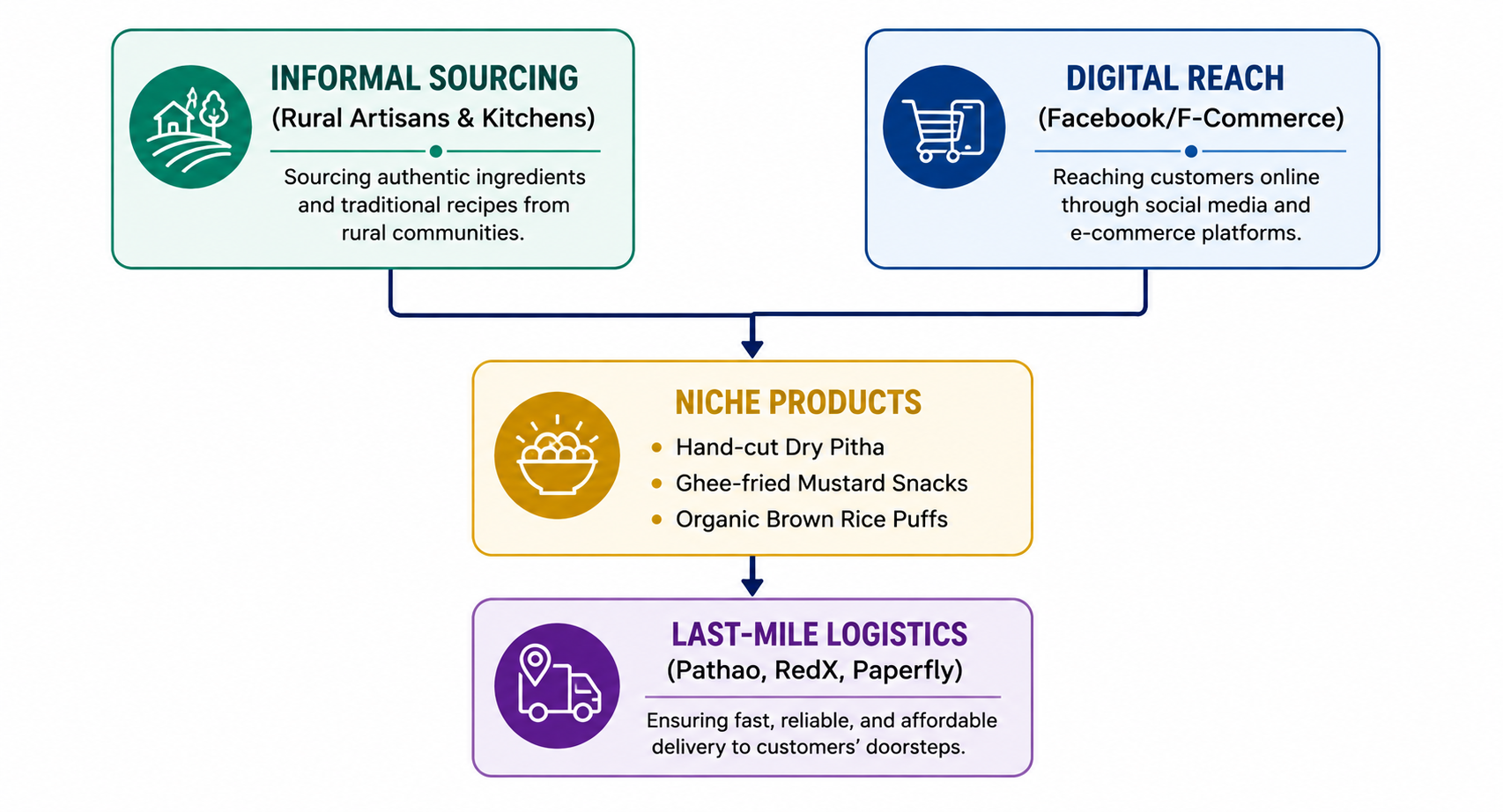
o Preservative-free, hand-cut dry pitha ready for quick home frying.
o Organic, low-sodium chira bhaja (flattened rice mixes) roasted in traditional mustard oil or ghee.
o Millet and brown-rice snacks catering to fitness-conscious urbanites dealing with lifestyle diseases like diabetes.
Supported by nationwide third-party courier services (Pathao, RedX, Paperfly) and mobile financial services, a home baker in rural Bogura or Sylhet can now take pre-orders online, package dry foods in custom-branded kraft paper pouches, and ship them directly to a customer in Dhaka within 48 hours.
Overcoming Regulatory and Supply Chain Hurdles
Despite its strong trajectory, the sector faces several structural hurdles that business owners and investors must navigate carefully:
Quality Certification & Standards Compliance
To sell dry food legally in the domestic market, manufacturers must obtain certification from the Bangladesh Standards and Testing Institution (BSTI). However, exporting to Western markets requires passing far stricter regulatory bars, including testing for heavy metals, unauthorized food dyes, and pesticide residues mandated by the US Food and Drug Administration (FDA) and the European Food Safety Authority.
Raw Material Volatility & Packaging Costs
The dry food industry relies heavily on imported multi-layer polymer films and aluminum foils required to keep products crisp in Bangladesh's humid, tropical climate. Fluctuations in global plastic resin prices and import duties directly squeeze profit margins. Additionally, local price spikes in cooking oils, pulses, and spices can disrupt production planning for small and medium-sized enterprises (SMEs).
Cold and Dry Storage Infrastructure
While dry foods do not spoil as quickly as fresh produce, extended storage in high humidity without proper climate control leads to rancidity in oil-fried items like chanachur and potato chips. Expanding temperature-controlled warehousing across rural agricultural hubs remains a pressing infrastructure need.
Strategic Roadmap: How to Enter the Market
For new entrepreneurs, SMEs, or agri-investors looking to capture a slice of Bangladesh's dry food market, success requires a focused approach:
1. Target "Clean Label" Niches: Rather than competing head-to-head with industrial giants on standard chanachur, focus on baked (non-fried), gluten-free, low-sodium, or sugar-free traditional snacks.
2. Prioritize Packaging Tech: Moisture is the primary enemy of dry food. Invest early in nitrogen-flushing machinery and high-barrier pouch packaging to extend shelf life naturally without heavy artificial preservatives.
3. Formalize Regulatory Compliance Early: Secure Trade Licenses, BSTI standardization, E-TIN, and Halal certification right from the start. Having these credentials ready makes it significantly easier to pitch to chain superstores and international B2B buyers.
4. Build Direct Agri-Links: Partner with farm cooperatives to source raw commodities (paddy, peanuts, mustard seed, fresh fruits) directly, cutting out middlemen to protect operating margins.
Looking Ahead: The Future of Bangladesh’s Dry Food Sector
The evolution of Bangladesh’s dry food industry is a compelling case study in transforming traditional culinary heritage into modern economic value. By pairing authentic flavor profiles with automated processing, multi-layer barrier packaging, and systematic quality controls, the country has elevated everyday cultural staples—from jhalmuri and chanachur to puffed rice and dehydrated tropical fruits—into an $8 billion industrial powerhouse.
As processing technologies advance, local supply chains mature, and international distribution networks deepen, dry food manufacturing will play a pivotal role in diversifying Bangladesh's export portfolio beyond ready-made garments. For entrepreneurs, investors, and FMCG leaders, the sector offers fertile ground where heritage, convenience, and global market demand intersect.
References
Bangladesh Investment Development Authority. (2024). Agro-processing revolution: Sectorial overview and investment opportunities. Government of the People's Republic of Bangladesh. https://investbangladesh.gov.bd/investment-sector/agribusiness
Mordor Intelligence. (2026). Bangladesh foodservice market size & growth analysis (2026–2031). Mordor Intelligence Industry Reports. https://www.mordorintelligence.com/industry-reports/bangladesh-foodservice-market
United States Department of Agriculture. (2025). Bangladesh: Exporter Guide Annual (GAIN Report No. BG2025-0012). USDA Foreign Agricultural Service. https://www.fas.usda.gov/regions/bangladesh