Completed Research

Search Completed Research


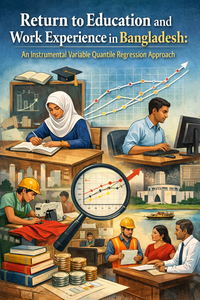
Return to Education and Work Experience in Bangladesh: An Instrumental Variable Quantile Regression Approach

Project Description: This project examines how education and work experience influence workers’ earnings in Bangladesh and how these benefits differ across income groups. Using nationally representative data from the Household Income and Expenditure Survey (HIES) 2016–2017, the study explores the returns to human capital while accounting for wage differences by gender, location, and income level. It applies advanced econometric methods to estimate the true impact of education and work experience on earnings and to address potential bias in conventional wage models.The research investigates whether the benefits of education are shared equally among workers or whether they vary across the wage distribution....

Read More
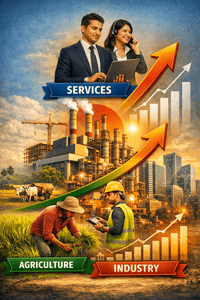
The Role of Agriculture, Industry, and Services Sector in the Economic Growth of Bangladesh: An ARDL Analysis

Project Description: This project examines how the agriculture, industry, and services sectors have contributed to Bangladesh’s economic growth over the past five decades. Using annual data from 1971 to 2020, the study explores both the short-term and long-term roles of these three major sectors in supporting the country’s economic development. The research applies the Autoregressive Distributed Lag (ARDL) model to identify the long-run relationships between sectoral performance and economic growth while ensuring the reliability of the results through a series of diagnostic and stability tests.The study evaluates how Bangladesh’s economy has evolved through structural transformation, with labor and resources gradually shifting...

Read More

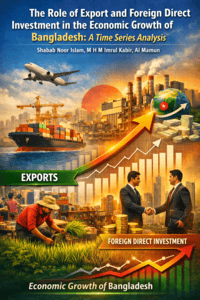
The Role of Export and Foreign Direct Investment in the Economic Growth of Bangladesh: A Time Series Analysis

Project Description: This project examines the relationship between foreign direct investment (FDI), exports, and economic growth in Bangladesh, with a particular focus on how major economic changes and global shocks have influenced the country’s development. Using annual data from 1986 to 2022, the study analyzes both short- and long-term relationships among these key economic indicators using advanced time-series econometric techniques.The research investigates whether exports and FDI have contributed to Bangladesh’s economic growth and assesses the importance of events—such as Bangladesh’s transition to lower-middle-income status, the COVID-19 pandemic, and the Russia–Ukraine conflict—for these relationships. By incorporating structural changes into the analysis, the...

Read More

Try The Newsletters

Sign up to our newsletter and get the lattest research informations you wont find anywhere else straight to your inbox!